

Where AI Helps Law Firms Most: 15 Experts on Intake, Conflicts, and ROI
In the modern legal landscape, the firm that responds first usually gets the retainer.
For law firm partners and operations leaders, the “Amazon effect” has changed the rules of engagement. The question is no longer if you should adopt AI for law firms, but where to deploy it first to stop revenue leakage. Does the highest ROI come from fixing the “front door” to reduce client no-shows? Or is the real value hidden in the back office, using legal automation to streamline conflict checks, speed up e-signatures, and secure billable recovery?
We bypassed the theories and went straight to the source. We interviewed 15 legal thought leaders…from high-volume personal injury firms to specialized criminal defense practices….to uncover exactly where AI consulting and implementation are moving the needle.
Here is their verdict on how technology is redefining the business of law using AI.
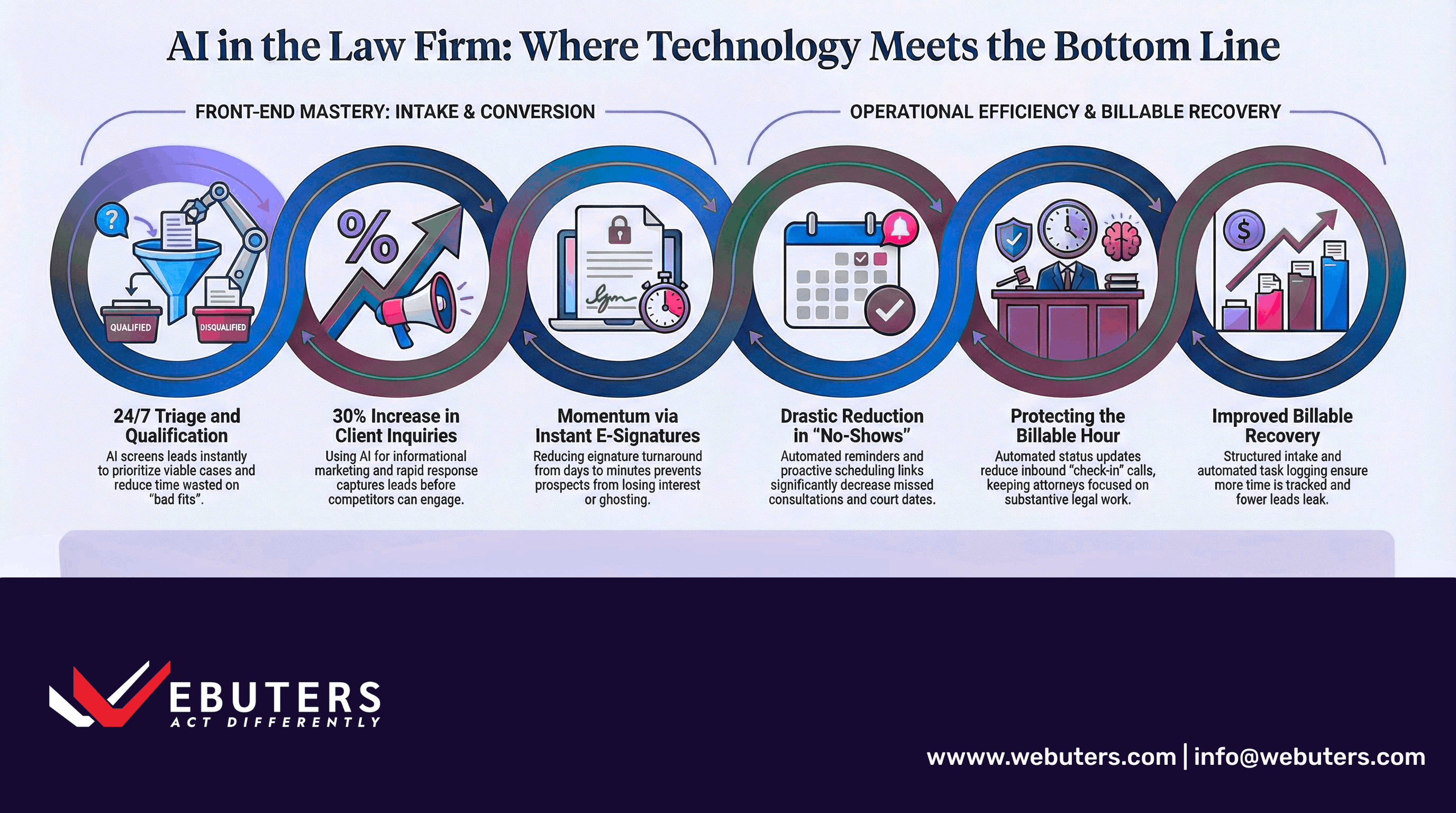
Here is what they had to say.
Start With AI Intake to Qualify Faster
At Lluis Law, AI helps most with screening new clients. We automated the initial intake process and now find qualified leads faster. That improved our follow-ups and cut down the time we waste on cases that aren’t a good fit. This has been our standard approach since serving our diverse, bilingual community became a priority. I’d start there.
Ramiro Lluis, Managing Attorney, Lluis Law
AI Lifts Intake, Momentum, and Client Confidence
From where I sit, AI delivers the most value at the front and middle of the case lifecycle, where speed, consistency, and follow-through directly affect outcomes. Intake triage is a big one. When AI helps capture complete facts, flags liability indicators, and routes matters to the right team, you see fewer missed opportunities and fewer cases accepted that shouldn’t be. That protects both clients and lawyers.
Conflicts and e-signatures are more about removing friction. They don’t win cases, but they prevent cases from stalling. Anything that reduces the time between first contact and signed engagement improves show rates and client confidence. We know delays cost momentum, and momentum matters when people are deciding whether to trust you with a serious problem.
Status updates are where I see meaningful gains in client satisfaction and staff efficiency. Clients want to know what’s happening, even when nothing is happening. Automated, accurate updates reduce inbound calls and let lawyers focus on strategy instead of chasing routine communications.
As for data, firms using AI-assisted intake are reporting higher qualified-lead conversion and fewer no-shows, largely because prospects are contacted faster and more consistently. Billable recovery improves when cases are better vetted, and clients are engaged early. Technology won’t replace judgment, but it absolutely sharpens it when used to support, not substitute, the lawyer’s role.
Tim Wheeler, Partner, Greene Broillet & Wheeler
Smart Updates Drive Communication and Case Momentum
In high-volume injury practices, client communication is where things either run smoothly or fall apart. People don’t just want results; they want to know what’s happening. AI helps most, in my view, with automated status updates, appointment reminders, and keeping clients informed without overwhelming staff.
When clients feel left in the dark, you see more missed appointments, frustration, and disengagement. Smart automation can send timely updates, explain next steps, and prompt document submissions before they become bottlenecks. That directly affects case momentum and ultimately recovery.
Intake triage also benefits. AI can quickly identify whether a case involves medical negligence, elder abuse, or workplace injury and route it appropriately. That saves time and avoids the shuffle that makes people feel like they’re being passed around.
As for hard data, many firms report higher qualified intake rates and fewer no-shows once automation is layered into scheduling and follow-up. It’s not magic; it’s consistency. Systems don’t forget to check in or send reminders, and that consistency protects revenue and relationships.
Still, no algorithm replaces judgment when you’re evaluating complex liability or long-term care failures. AI handles volume and organization. Lawyers handle responsibility. That balance is where the real value lives.
Steve Malman, President, Malman Law
Cut Delay and Risk, Protect Attorney Focus
From what I’ve seen, AI helps most when it reduces friction at the very front and very back of the client journey. Intake triage and document execution are where firms quietly lose both time and revenue. Automating intake doesn’t just speed things up; it improves consistency, flags missing data, and helps route matters to the right team faster, which is critical when you’re handling high-stakes disputes or regulatory-sensitive matters.
Conflict checks are another strong use case. AI-assisted searches across prior matters, entities, and related parties reduce risk while dramatically shortening turnaround. That’s not just operational efficiency; it’s risk management, and in our world, those two are inseparable.
On e-signatures and status updates, the benefit is less about novelty and more about discipline. When systems automatically move files forward and keep clients informed, attorneys stay focused on substantive work instead of administrative follow-ups. That translates directly into better utilization.
As for data, industry benchmarks consistently show that structured intake and rapid follow-up materially increase qualified conversions and reduce no-shows. Firms using automated reminders and pre-qualification logic often see double-digit improvements in kept appointments and faster time-to-engagement, which also improves early billable capture.
In short, AI delivers the most value where it removes delay, reduces risk, and protects an attorney’s focus. That’s where the financial return tends to show up first.
Matthew Stoddard, Founder, The Stoddard Firm
Use AI to Streamline Operations, Keep Lawyers Central
As a law firm founder, I believe the most important way AI will affect our profession is in the operational areas of the firm where we spend time, money, and lose clients long before a billable hour exists.
While AI has many benefits, AI is not an attorney. It cannot substitute for legal judgment, make ethical decisions, or carry the professional obligations attorneys hold. AI is simply another tool attorneys can use to support their responsibilities, and it is most effective when it assists lawyers rather than attempts to replace them.
I would rank AI driven intake triage as the first priority. It can help sort new leads by urgency, practice area, jurisdiction, and basic viability, allowing qualified prospective clients to reach attorneys sooner while reducing time spent on matters that were never likely to be a good fit.
Conflicts checks are another area where AI can enhance productivity by flagging name variations, related entities, and prior adverse parties more quickly and accurately than manual review. Ultimately, however, the decision to accept representation remains solely with the attorney.
On the workflow side, the low hanging fruit includes e signatures and document automation. Engagement letters, fee agreements, and authorizations can now be completed in minutes instead of days, reducing friction and improving conversion.
Another underutilized application is automated status updates. Clients usually reach out when they are uncertain about their case status and fear being forgotten. AI powered portals and proactive updates reduce avoidable check ins, improve satisfaction, and protect attorney focus.
Research by legal operations professionals consistently identifies intake leakage, delayed follow up, and missed appointments as major sources of lost revenue. Firms with streamlined intake and reminder systems often report higher qualified consultation rates and stronger billable recovery because fewer opportunities fall through the cracks.
Ultimately, the largest benefit of AI is attention. Each unqualified call, unnecessary administrative task, and interruption reduces time available for billable work. Used appropriately, AI helps firms maintain focus, improve efficiency, and create a stronger client experience.
Firms that successfully incorporate AI are not chasing trends. They are leveraging a practical tool to strengthen the intake to engagement pipeline while keeping the attorney at the center of the work, where the law should remain.
Jamie E. Wright, LA Litigator & Founder/CEO, The Wright Law Firm
Intake Automation Boosts Conversions, Cuts No-Shows
AI has helped my firm most with intake triage and follow-up. Our automated intake tools capture leads 24/7, ask structured questions, and quickly flag viable cases, which has noticeably increased the percentage of qualified intakes. We have also seen fewer no-shows thanks to automated reminders and faster e-signature workflows. While I don’t rely on AI for legal judgment, it has clearly improved conversion rates and reduced staff time spent chasing unresponsive leads.
Elizabeth Kayatta, Medical Malpractice and Personal Injury Attorney, Berman & Simmons
Reminders Reduce Missed Dates, Free Strategy Time
Our practice has benefitted from AI with scheduling, client communication, and document organization rather than intake volume. Our automated reminders have reduced missed court dates and client no-shows, which is critical in criminal cases. It has also sped up our transcript summaries and discovery review, which has freed up more time for strategy and client counseling rather than administrative work.
Jarrod Smith, Trial Attorney & Partner, Smith & Vinson Law Firm, PLLC
AI Sharpens Employment Intake, Review, and Updates
In employment law, AI is most helpful with intake screening, document review, and status updates. AI-driven intake helps quickly identify statute issues and viable claims, which improves efficiency and reduces wasted consults. Automated updates also keep clients informed, lowering inbound calls and improving client satisfaction. While the financial impact isn’t always as dramatic as contingency practices, the time savings are significant.
Thomas Ricotta, Partner, Ricotta & Marks, P.C.
Faster Intake Wins Clients Before Rivals
Cases are won or lost at the intake stage. Our AI tools respond 24/7, screen leads, and route qualified cases quickly reduce missed opportunities and increase signed retainers. Faster responses matter because injured clients often contact multiple firms and hire the first one that engages them.
This has also improved intake quality by filtering out non-viable cases, saving staff and our time. Automated reminders, scheduling, and e-signature tools reduce no-shows and help convert interest into signed clients faster. On the back end, AI assists with conflicts checks, document summaries, and routine status updates, freeing lawyers to focus on legal work. Overall, firms using AI consistently see more qualified intakes, fewer lost leads, and better revenue recovery without adding staff.
Blaine Rogers, Attorney, Davis Levin Livingston
Stop Lost Leads With After-Hours Intake Automation
AI has been most impactful for reducing lost opportunities at the front end. Intake automation and AI-assisted screening ensure no potential case slips through after hours, which is critical in personal injury work. Since implementing these tools, we’ve seen stronger consult-to-retainer conversion and fewer delays that used to cost us good cases. AI-assisted billing and task prompts have also helped recover time that previously went untracked.
Ryan Perdue, Partner, Simon Perdue Law
Document Review, Not Intake, Delivers Biggest Gains
AI adds the most value in document management and large-scale review rather than intake. AI tools help sort, summarize, and identify patterns across massive datasets, saving hundreds of hours. On the operational side, automated workflows and e-signatures help coordinate efficiently with co-counsel and large client groups, improving overall case velocity.
Brittnie Panetta, Attorney, Matthews & Associates
Stronger Advocacy Through Streamlined Intake and Operations
When it comes to leveraging AI in the legal world, the opportunities are significant, but the focus should always be on where it empowers lawyers to do what they do best: advocate for people who’ve been wronged. From my perspective, AI shines brightest in intake triage. Sorting inquiries efficiently allows a law office to identify the clients who truly need representation without letting anyone slip through the cracks. It’s not about replacing the human touch; it’s about making sure our energy goes to fighting the bullies, not chasing down paperwork.
AI also proves invaluable in conflict checks. In a law practice, even a small missed conflict can have serious repercussions. Automating this step with AI reduces risk and ensures that lawyers are free to focus on strategizing and litigating, rather than double-checking databases manually. Coupled with AI-powered e-signature workflows, the process of onboarding new clients becomes smoother, faster, and more secure.
Status updates and client communication are another area where AI can make a real difference. Predictive notifications, automated reminders, and proactive updates ensure clients feel supported and informed throughout their case. This reduces no-shows and strengthens engagement, while freeing attorneys to concentrate on legal strategy rather than chasing administrative tasks.
Finally, the real measure of AI’s value lies in its impact on the bottom line: qualified intakes, reduced no-shows, and improved billable recovery. By triaging effectively and streamlining operations, AI allows lawyers to maximize the time spent advocating for injured individuals, not wrestling with logistics. In short, AI doesn’t replace a lawyer; it makes the lawyer more formidable in their fight for justice.
Remington Fang, Owner, Fang Law Firm
AI Expands Reach and Increases Client Inquiries
For our personal injury law firm, AI helps the most with marketing our firm to prospective client. With AI, we are able to create more informational content for prospective clients to find us. We’ve found that using AI in marketing gives us an edge over competitors, as many prospective clients read the pieces we write with the help of AI before contacting us. This allows us to already get the trust of a prospective client before we’ve ever spoken with them. Since integrating AI into our marketing, we’ve found that our prospective client calls have approximately increased 30%.
John Malm, Owner, John J. Malm & Associates Personal Injury Lawyers
Fast AI Intake and Follow-Up Win Leads
AI helps us most where the clock is ticking. In criminal defense, people reach out in panic, sometimes from a jail phone, sometimes right after an OVI stop at 1 a.m. If you don’t respond fast, they call the next lawyer. That’s why we’ve put AI and automation around intake triage and speed-to-lead: web chat that grabs the basics, call transcripts that give my team a clean summary, and routing that gets it to the right attorney fast. I’ve watched leads go cold in under an hour. When we answer fast and follow up clean, qualified intakes go up because the serious people feel taken care of.
Conflicts is next, but I don’t let a tool “clear” a conflict. We use automation to standardize names, aliases, and parties, then we run the real check and document it. E-signature is underrated in our space because clients are stressed, out of state, or family is paying. Cutting signature turnaround from days to minutes can be the difference between moving forward and losing momentum. Status updates matter too, but keep them controlled: automated “next step” texts after key milestones, not a chatbot giving legal advice.
On no-shows and billable recovery, the best gains come from boring systems: confirmations, reminders, a simple reschedule link, and a consult fee when it makes sense. If someone ghosts, an automated follow-up sequence and a live call the same day saves more consults than any fancy tool.
Brian Joslyn, Owner, Joslyn Law Firm
Back-End Automation Reduces Calls and Protects Revenue
AI earns its keep on the back end, not at the front door. Intake still needs a lawyer’s ear, especially in criminal and DWI cases where one fact changes everything. Where we’ve gotten real value is status updates and follow-through. Courts move, clients panic, and phones light up. AI-driven updates tied to court calendars and case milestones cut down the “any update?” calls. That matters when you’re in Superior Court in the morning and municipal court in the afternoon. Clients stay informed, staff stays focused, and lawyers aren’t pulled out of prep every ten minutes.
Conflicts checking is another quiet win. We’re a large shop, multiple counties, overlapping defendants, related cases. Automating that check across past and current matters saves time and avoids mistakes. It’s not flashy, but it protects the firm and the client. Same with e-signatures. Retainers and authorizations used to stall cases for days. Now they’re done while the client is still motivated to move forward. That alone improves follow-through.
Billable recovery shows up in small ways that add up. Missed appointments drop when reminders are automated and clear. We’ve seen fewer no-shows just because people know exactly when and where they’re supposed to be, and what happens if they don’t show. Time entries are cleaner when routine tasks are logged automatically instead of reconstructed at night. That protects revenue and cuts down on write-offs.
Jonathan F. Marshall, Attorney, The Law Offices of Jonathan F. Marshall
How Webuters Can Help Your Firm Automate and Scale
As the experts highlighted, the gap between a struggling firm and a scaling firm often lies in how effectively they use technology to handle speed, volume, and data.
At Webuters, we specialize in bridging the gap between legal expertise and digital efficiency. Whether you are looking to deploy an intelligent intake bot to capture leads at 2:00 AM, or you need a sophisticated back-end automation system to handle conflicts and status updates, our team can engineer the solution.
We help law firms:
-
Build Custom AI Triage Systems: Screen leads instantly based on your specific legal criteria to ensure your partners only speak to qualified prospects.
-
Automate Workflow Integration: Seamlessly connect your intake forms, CRM, and e-signature platforms to reduce administrative drag.
-
Enhance Data Visibility: Create dashboards that track the metrics that matter…consult attendance, billable recovery, and lead quality.
Don’t let qualified leads slip through the cracks or billable hours get lost in administrative chaos. Let Webuters build the infrastructure that powers your firm’s growth.
The Bottom Line
The consensus among industry leaders is clear: while AI offers benefits across the entire legal value chain, the most immediate ROI is found at the “Front Door.”
By implementing AI in intake triage, firms are reporting increases in qualified leads ranging from 15% to 40% and reductions in no-show rates by up to 40%. However, the value doesn’t stop at the consult. As several experts noted, using automation for status updates and conflict checks on the back end is essential for protecting the revenue that the intake team generates.
The future of law isn’t about replacing attorneys; it is about automating the friction that prevents them from practicing law. Whether through faster e-signatures or smarter conflict checks, the firms that adopt these tools today are the ones that will dominate the market tomorrow.

Loading...