
About the Client
The client is a mid-size discrete manufacturer running several production lines across two plants. Reliable output depended on ageing equipment, but maintenance was largely reactive and machine data sat unused in isolated OT and IoT systems.

Business Challenges
Unplanned downtime was the client's biggest source of lost output. Maintenance ran on fixed schedules and gut feel, failures surfaced only after a line had already stopped, and telemetry from PLCs, sensors, and the MES never came together in one place to warn teams early.
Webuters’ Solution
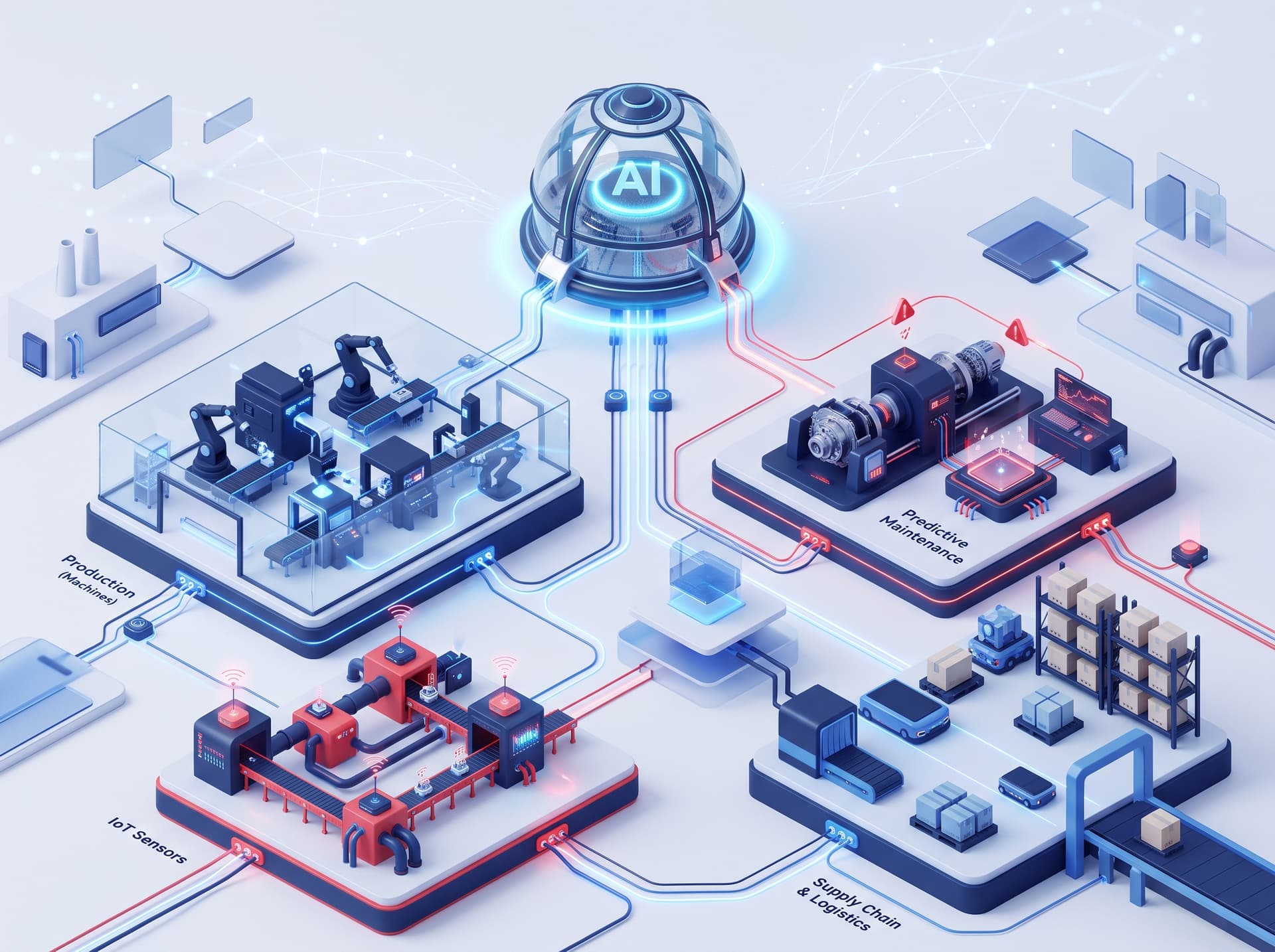
Unified telemetry from PLCs, sensors, and the MES into a single, AI-ready operational layer.
Modelled normal machine behaviour and flagged early drift long before a hard failure.
Predicted likely failure windows per asset so maintenance could be planned, not reactive.
Turned predictions into prioritized work orders aligned to production schedules.
The Impact

Case Studies
Want results like this?
Tell us about your goals and we'll show you how Webuters can deliver measurable outcomes for your organization — just like we did in this project.